How to Build Your Child's Independence Skills at Home
Five practical steps that turn daily tasks into learning opportunities, from task analysis to fading assistance gradually.
We teach self-care and self-reliance skills so that every day becomes easier and more independent.
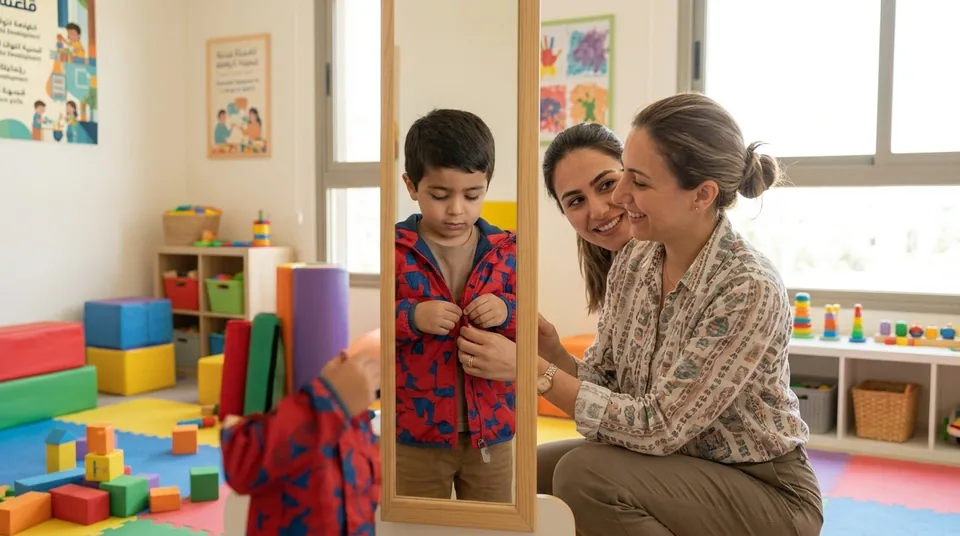
"When will he manage on his own?" is a question every family of a child with special needs asks, and a fair one: independence means dignity for the child, relief for the family and a wider future. At Ostathna in Amman we answer it with a plan, not promises.
We first measure independence across self-care tasks: dressing and undressing, eating and drinking, using the toilet, washing hands and face and brushing teeth, organising personal belongings, and following the daily routine. We then break each task into small steps and teach them one at a time with proven methods such as chaining and prompt fading, until the child performs them alone at home, not only at the centre.
The service suits children and adolescents with autism spectrum disorder, intellectual disability, developmental delay and Down syndrome, and any family in Jordan that wants a clear, workable plan for building independence at home.
Step by step
A comprehensive checklist of self-care tasks and daily routines, identifying what the child does alone and where help is needed.
We start with the tasks that affect your day most, and break each one into illustrated steps.
Structured training sessions at the centre and simulations of home situations, fading assistance gradually until performance is independent.
We coach parents on the same steps and track data from home to make sure the skill has truly transferred.
Can't find your question? Call us and we'll answer directly.
Yes. Self-care skills do not depend on speech; we use picture schedules, modelling and light physical guidance, then fade the help gradually.
It varies from child to child depending on the starting point and how regularly practice happens at home; the data we collect shows you progress week by week.
Yes. Toilet training is one of the core skills we work on, with a structured plan and close cooperation with the family.
Refusal is usually a message that the task is too hard or the help is not right. We adjust the steps and the reinforcement system with you until practice becomes a positive experience.
Five practical steps that turn daily tasks into learning opportunities, from task analysis to fading assistance gradually.
Short daily activities that build a child's attention and self-regulation, suited to children with ADHD and to any child who needs better focus.
How to turn mornings and evenings into a natural training programme without extra sessions.
The first assessment session identifies needs and priorities, then we suggest the most suitable plan.