Our services

Five integrated pathways at our centre in Amman, each starting with a precise assessment and ending with a skill the learner uses in everyday life.

Every service has its own page explaining who it is for, what we do, how sessions run, and answers to the questions parents ask most. If you are not sure which pathway fits, start with the assessment session and we will suggest the most suitable plan.

We start with a precise assessment of strengths and needs, then design an individual learning plan targeting the core cognitive skills: attention and focus, working memory, discrimination and categorisation, concept understanding, and early academic skills such as reading, writing and numeracy. Sessions use evidence-based methods at a pace that suits each learner.
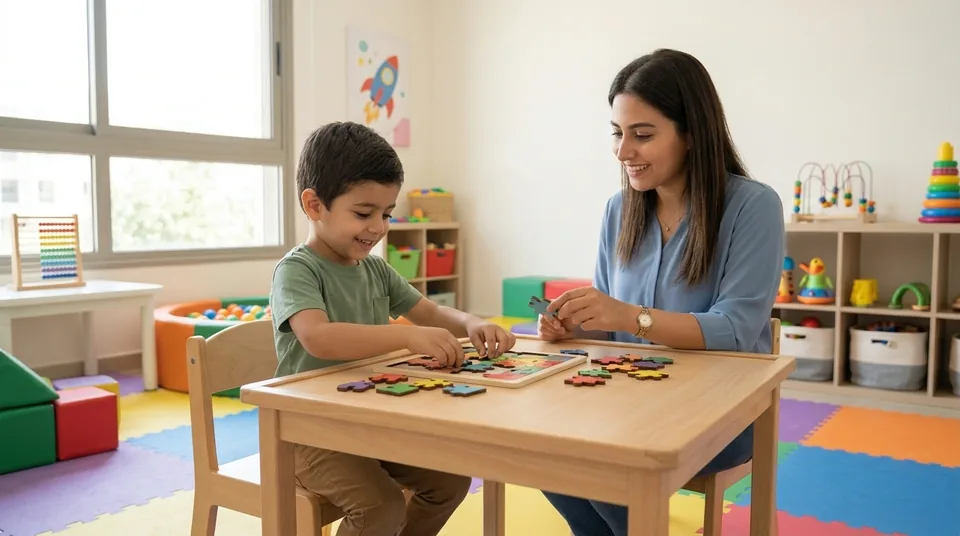
A boy fitting colourful wooden puzzle pieces together at a table while a specialist looks on

Who is it for?

  • Children facing learning or attention difficulties
  • Learners with developmental delay or autism spectrum disorder
  • Learners who need support with early academic skills

Expected outcomes

  • Longer attention and focus
  • New concepts and academic skills acquired
  • Greater confidence in learning situations
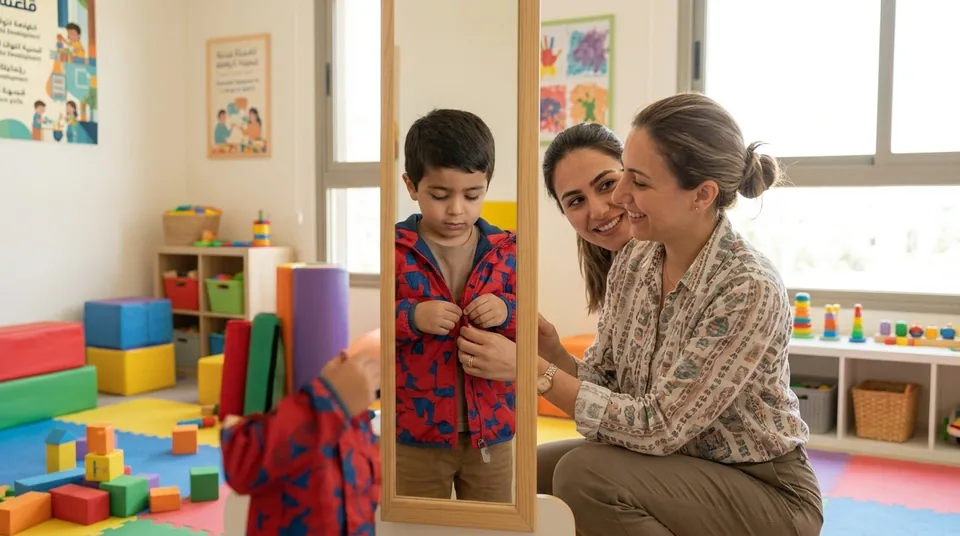
Independence is a skill learned one step at a time. We break every daily task into small, learnable steps, from dressing, eating and personal hygiene to organising belongings and following routines, and teach them systematically while fading assistance gradually until the learner performs them alone.

A child practising zipping up his jacket in front of a tall mirror, guided by two adults

Who is it for?

  • Children and adolescents who depend on others for daily tasks
  • Learners with developmental and intellectual disabilities
  • Families who want a clear plan for building independence at home

Expected outcomes

  • Independent self-care
  • Following daily routines with less help
  • Less load on the family and more confidence for the learner

No progress without measurement. We collect precise data on the learner's performance for every goal: response frequency, prompt level, accuracy and duration, and turn it into clear graphs that are reviewed regularly. That is how we know what works, adjust what doesn't, and give families an honest picture of progress.

Who is it for?

  • Every learner enrolled in our programmes
  • Families who want clear, objective follow-up
  • Schools and organisations that need documented progress reports

Expected outcomes

  • Evidence-based teaching decisions
  • Clear, understandable progress reports
  • Faster progress towards goals

Communication is the key to learning and relationships. We work on functional communication: requesting, expressing needs and feelings, understanding instructions, conversation and social skills. We use the mode that suits each learner best, whether spoken language or augmentative and alternative communication (AAC) systems.

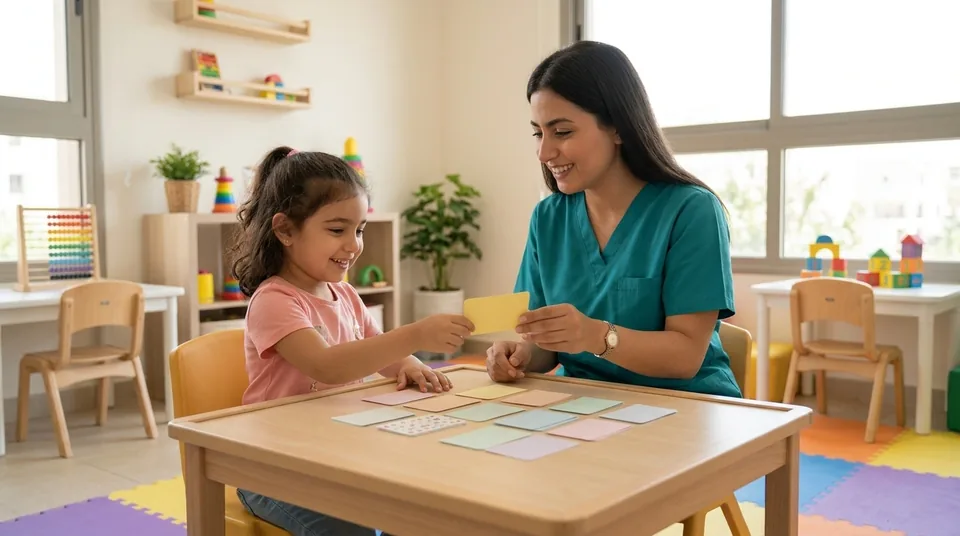
A girl exchanging colourful picture cards with a specialist across a small wooden table

Who is it for?

  • Children with delayed speech or language
  • Learners with autism spectrum disorder and social communication difficulties
  • Learners who need an alternative means of communication

Expected outcomes

  • Clearer expression of needs and feelings
  • Less frustration and fewer behaviours caused by communication breakdowns
  • Richer social interaction

We widen the circle of skills to include life outside the training room: moving around safely, handling money and shopping, preparing simple meals, using time and schedules, following the rules of public places, and everyday social skills. We teach in real situations or realistic simulations so that skills transfer to daily life.

Who is it for?

  • Adolescents and young adults preparing for a more independent life
  • Learners with special needs who need hands-on training
  • Families who want skills generalised into the community

Expected outcomes

  • Greater participation in daily life and the community
  • Less reliance on others
  • Better readiness for the next stages of life

Not sure which pathway fits?

The first assessment session identifies needs and priorities, then we suggest the most suitable plan.